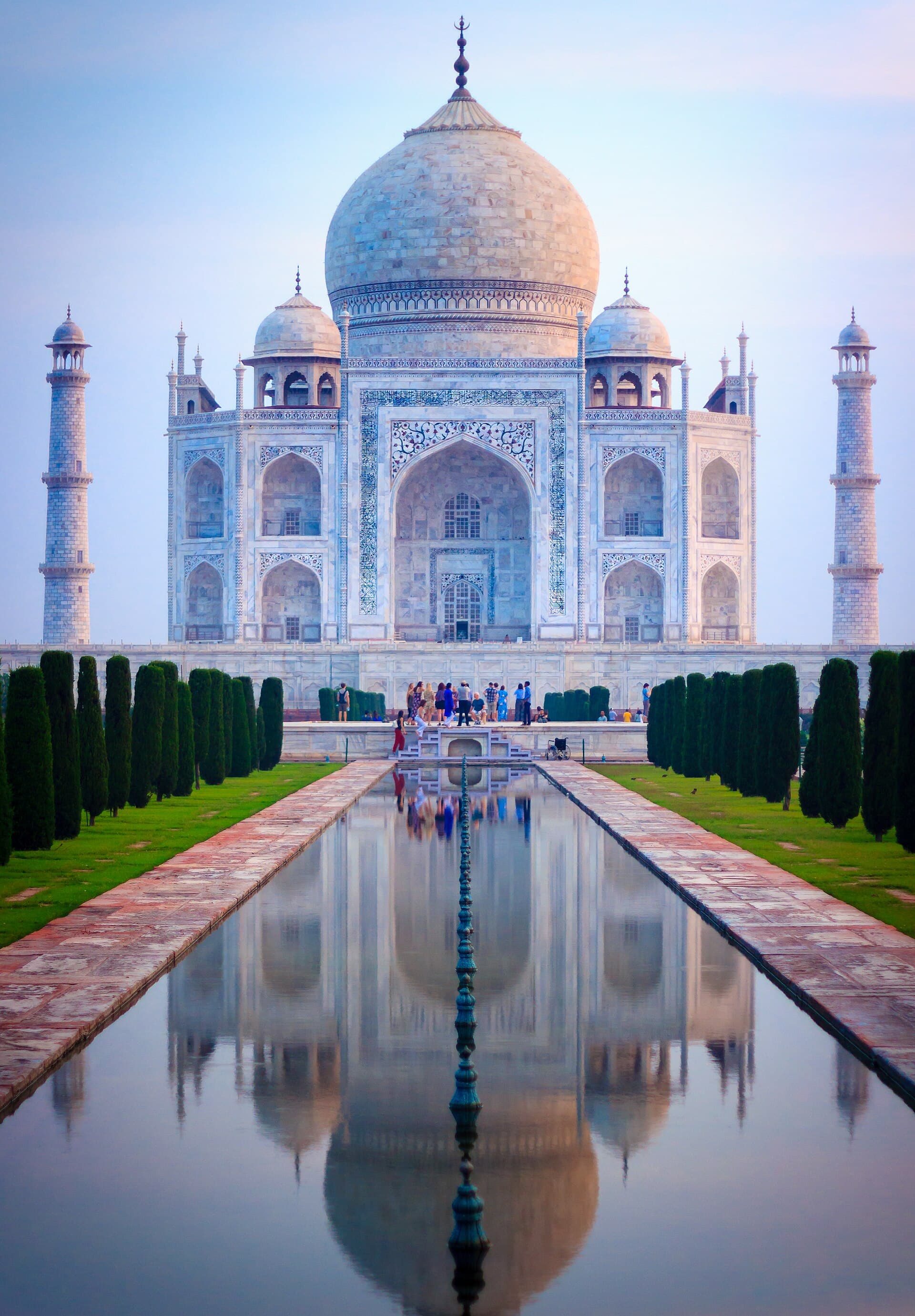
If you only ask one question before booking your India trip, this is usually it: when should I go to see the Taj Mahal? The short answer is sunrise, between October and March, and never on a Friday. The longer answer is more interesting — every month has its own light, its own mood and its own crowd.
We've been guiding travellers to the Taj for over a decade. Here's the month-by-month picture you actually need to plan your visit.
The short answer
- Best months overall: October, November, February, March.
- Best time of day: sunrise, every time. The marble glows pearl-to-rose and crowds are at their thinnest.
- Avoid: every Friday (closed for prayers), and the May–June heat unless you can only travel then.
- Watch out for: December and January morning fog, which can obscure the dome until mid-morning.
Month by month
| Month | Weather | Crowds | Verdict |
|---|---|---|---|
| January | Cold mornings (4–18°C), often foggy until 9–10am | Medium | Magical if the fog lifts. Bring layers. |
| February | Cool and clear (8–24°C) | High | One of the very best months. Book early. |
| March | Warm, golden light (14–32°C) | High | Excellent until late March, then it heats up. |
| April | Hot (20–38°C) | Medium | Doable at sunrise; brutal by noon. |
| May | Very hot (26–42°C) | Low | Skip if you can. Marble underfoot is fierce. |
| June | Hot, dusty, pre-monsoon (28–40°C) | Low | Avoid. Heat haze flattens the views. |
| July | Monsoon (26–35°C, humid) | Low | Moody and atmospheric but the river fills up. |
| August | Monsoon (25–34°C) | Low | Same as July — green, quiet, unpredictable. |
| September | Post-monsoon (24–34°C) | Low | Soft light and clear air. Underrated month. |
| October | Mild (18–32°C) | Medium | Season opens. Highly recommended. |
| November | Cool and clear (12–27°C) | High | Peak season. Book months ahead. |
| December | Cold and foggy (6–22°C) | High | Festive but foggy; afternoons often clearer. |
Why Fridays are a no-go
The Taj Mahal is a working mausoleum. It closes every Friday for the weekly congregational prayers held at its mosque. The grounds outside stay open, but you cannot enter the main complex. We see this catch travellers out every season — the gate staff are friendly but they will not let you in, and there are no exceptions.
Sunrise vs midday vs sunset
Sunrise wins for three concrete reasons. First, the white marble is reactive — at first light it shifts from pearl to rose to gold within twenty minutes. By midday under a high sun the marble looks flat and almost grey. Second, the crowds are at their lowest immediately after the 6am opening, so you can actually photograph the dome without a sea of phones in frame. Third, in summer the marble underfoot becomes too hot to stand on by 10am.
Sunset is a fine consolation prize, especially if your flight schedule rules out an early morning. The view from Mehtab Bagh across the river is arguably the most romantic Taj experience there is — and you do not need a ticket for it.
What about the December fog?
Northern India gets thick winter fog in December and early January. It can be magical — the dome looms out of the mist like a ghost — but it can also hide the Taj completely until mid-morning. If you are travelling in those weeks, build flexibility in. Two mornings in Agra is the safest way to guarantee a clear shot.
Tickets, timing and how we plan it
The Taj opens 30 minutes before sunrise and closes 30 minutes before sunset. Foreign-tourist tickets are higher than Indian-resident tickets but include a small water bottle and shoe covers. The east and west gates have the shortest queues at sunrise; the south gate is busiest.
When we plan a Madhshif itinerary, we always front-load the sunrise visit on day two of the Golden Triangle, swap automatically if it lands on a Friday, and quietly pre-book gate-skip tickets so the only thing you have to do is show up rested.
Quick answers
What is the absolute best time of year to visit the Taj Mahal?
Late October through early March is the comfortable window, with February and early March arguably the best — clear skies, low haze and warm-but-not-hot temperatures. November is the most photogenic but also the most crowded.
Is the Taj Mahal worth visiting in summer or monsoon?
Yes, with caveats. Summer (May–June) is brutally hot — do sunrise only and skip the afternoon. Monsoon (July–September) is humid but green and uncrowded; light can be moody and beautiful when the rain breaks.
How early should I arrive for sunrise at the Taj Mahal?
Be at your chosen gate 30 minutes before official sunrise. Security takes 10–15 minutes and you want to be inside the main gateway as the sky starts to lighten.